Commercial Solventless Lab Floor Plan, Cold-Room HVAC & 12-Month Equipment ROI Blueprint
A turnkey commercial solventless extraction lab requires zero Class-1 Division-1 (C1D1) explosion-proof blast rooms, allowing licensed operators to launch a 300 sq ft GMP hash wash and rosin pressing suite for $28,000 to $52,000 in total capital expenditure -- achieving full hardware payback inside 18 to 35 production shifts at 4.5% WPFF live rosin yield.
Spending $350,000 and 14 months permitting a C1D1 hydrocarbon butane blast booth only to compete in a commoditized $8/gram BHO market.
Building a 3-zone sanitary solventless cell (42 F Wash Room + Lyophilization Bay + Post-Press Rosin & Cartridge Cleanroom) with Hashtek/Lowtemp/Harvest Right/Blunt Engineering hardware that pays off CAPEX in under 30 batches.
Quantitative Engineering Specification Matrix
| Lab Zone / Subsystem | Target Environmental Spec | Core Commercial Equipment | CAPEX Budget (USD) | Daily Throughput Capacity |
|---|---|---|---|---|
| Zone 1: Cold Wash & Sieve Wet Room | 40 F - 46 F Ambient // Epoxy Floor Drain // RO Water (<10 ppm) | 65-Gal Jacketed Sanitary Washer + 300 GPD RO Chiller | $8,500 - $15,500 | 20 - 40 kg Wet WPFF Biomass / Day |
| Zone 2: Sublimation / Lyophilization Bay | 60 F - 68 F Ambient // Dedicated 20A Circuits | 2 x Harvest Right Pharmaceutical Large / Commercial Freeze Dryers | $7,600 - $11,500 | 3,000 - 5,000 g Wet Bubble Hash / 24h |
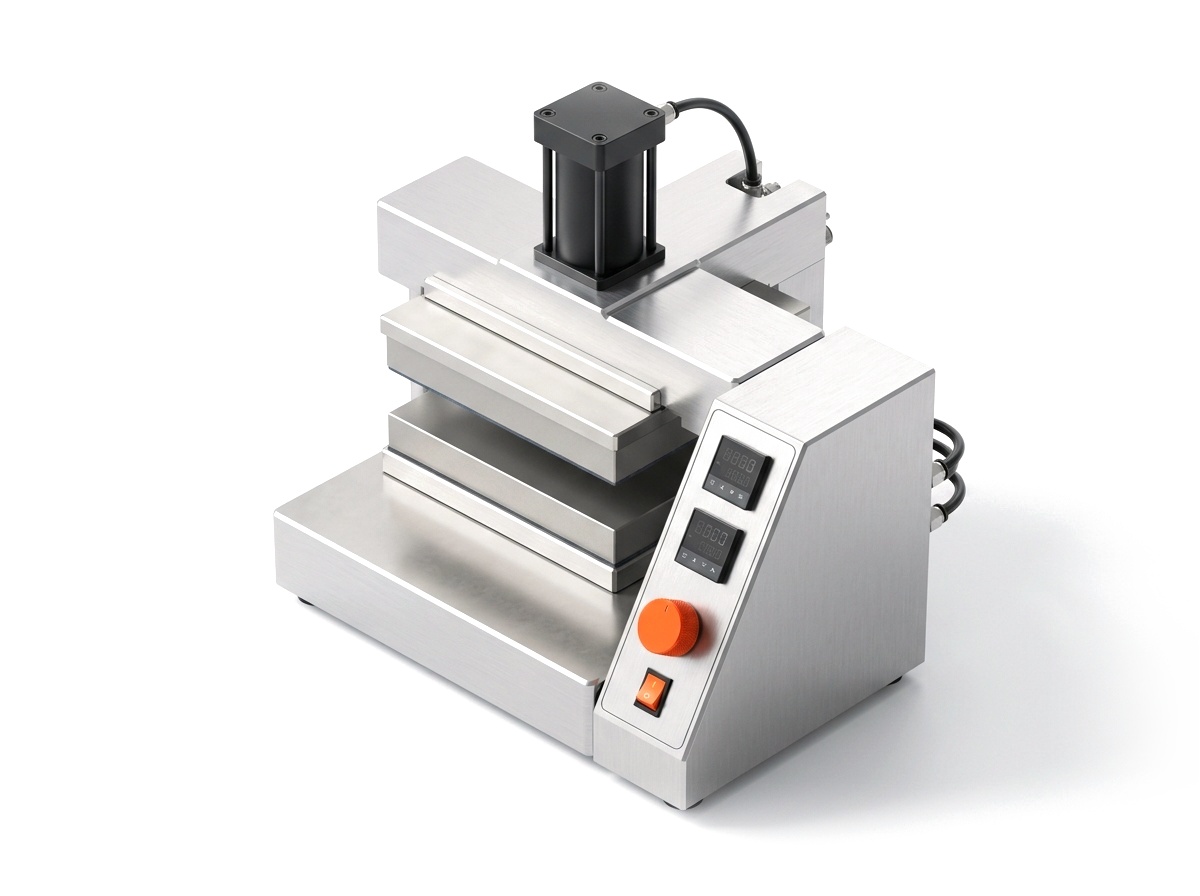
| Zone 3: Pressing & Curing Cleanroom | 62 F - 66 F // HEPA Positive Pressure | 2 x 20-Ton 4x7 Gauge Hydraulic or Pneumatic Rosin Presses | $4,800 - $9,800 | 800 - 1,600 g Finished Live Rosin / Shift |
| Zone 4: Postless Vape Filling Station | 68 F // ISO-7 Laminar Bench | Blunt Engineering 100-Cavity Heated Filler + EmptyVapes Hardware | $4,500 - $8,500 | 1,500 - 3,000 Live Rosin Pens / Shift |
1. Why Solventless Beat Hydrocarbon (BHO) on Both CAPEX and Gross Margin
Hydrocarbon (butane/propane) and ethanol extraction labs require Class-1 Division-1 (C1D1) explosion-rated booths, spark-proof HVAC exhaust interlocks, local fire-marshal hazardous occupancy permits, and $150,000+ closed-loop skids. A 100% solventless extraction lab uses only potable reverse-osmosis water, ice, vacuum sublimation, and heated mechanical platens. Because zero flammable gases or toxic solvents exist on the premises, facility buildout costs drop by 75% to 85% while finished wholesale gram prices for 6-star live hash rosin command 2.2x to 3.0x the price of hydrocarbon live resin.
Even more importantly, dividing your lab into three temperature-controlled zones (Wash, Lyophilization, and Pressing/Filling; see turnkey industrial specs at [Blunt Engineering) allows a two-person extraction crew to process 25 kg of fresh-frozen cannabis per day into 1,000+ grams of live hash rosin.
2. Cold-Room HVAC & Reverse-Osmosis Chiller Engineering
Never rely on dumping bags of convenience-store ice into plastic trash cans in a 70 F room. Commercial wash consistency requires two infrastructure investments: - Walk-In Wash Cold Room Held at 42 F to 45 F (5.5 C to 7.2 C): Keeping the ambient air temperature inside the wash room at 43 F prevents trichome heads from smearing onto the inner walls of your 73u and 90u sieve bags while draining and collecting. - 300-Gallon Insulated RO Water Holding Tank With Glycol Chiller Loop (33.0 F Setpoint): Filter municipal water through a sediment, carbon, and RO membrane stage down to <10 ppm TDS (calcium and magnesium ions in hard tap water bind to trichome cuticles and leave white mineral ash on quartz bangers), and pre-chill the entire water reserve to 33.0 F (0.5 C) overnight so wash vessels fill at target temperature in 90 seconds.
Standardized RosinHub Laboratory Telemetry & Verification Protocol
Every recommendation in this Commercial Solventless Lab Floor Plan, Cold-Room HVAC & 12-Month Equipment ROI Blueprint engineering guide (commercial solventless extraction lab setup) is benchmarked against the standardized three-pillar telemetry framework used across the RosinHub 40-Model Hardware Rank & Review Index:
- True Bag-Level PSI Calibration (40% Scoring Weight): Rather than citing raw hydraulic ram tonnage or uncalibrated bottle-jack claims, all pressure targets in this guide are normalized to True Bag-Level PSI (
Force_Lbs / Compressed_Bag_Area_sqin). Whether you operate a compact 4-ton home press with 3x5 inch platens or a 20-ton commercial press with 4x7 inch platens, keeping the hydrostatic pressure inside the monofilament nylon weave within the exact target window prevents cuticular lipid co-extraction and eliminates ultrasonic seam blowouts. Verify your exact press-and-bag combination in 5 seconds using the Interactive Rosin Platen & Bag PSI Calculator. - Platen & Chamber Thermal Uniformity (35% Scoring Weight): Temperature setpoints are only meaningful when surface variation across the contact zone stays below
+/- 2.5 F (1.4 C). Single-heater platens and uninsulated thin aluminum plates suffer up to 18 F of perimeter heat drop during a 120-second press, causing resin to solidify prematurely at the bag edges. We test every platen face across a 9-point Type-K surface thermocouple grid under load. - Mass-Balance Yield & Payback Economics (25% Scoring Weight): Every extraction adjustment -- from dropping platen temperature by 8 F to switching from a 120u flower bag down to a 90u or 73u bag -- trades gross weight against terpene and cannabinoid purity. Model your exact biomass cost, wet-to-dry WPFF wash conversion, and hardware break-even timeline in the Wash-to-Rosin Yield & ROI Calculator and cross-check cultivar genetics in the 50-Strain WPFF Bubble Hash Wash Database.
By anchoring your solventless SOP to measurable physical units -- degrees Fahrenheit/Celsius at the platen-parchment interface, pounds per square inch at the compressed nylon footprint, equilibrium relative humidity (62% ERH), and micron pore diameter -- you eliminate batch-to-batch guesswork and reproduce commercial 6-star results on any calibrated press.
Step-by-Step Pre-Press & Post-Press Quality Control Checklist
Run this 8-point engineering quality control gate before and after every batch to lock in repeatable yields:
- Gate 1 -- Biomass Hydration & Temperature Audit: For cured flower, verify 60% to 64% equilibrium relative humidity (ERH) inside a sealed jar for at least 36 hours before molding. For WPFF bubble hash or dry sift, verify anhydrous dryness (
<1.2% moisturevia the 300 F hot-knife sizzle check) and load bags in a chilled environment (<55 F) so trichome heads stay free-flowing. - Gate 2 -- Micron Mesh & Seam Orientation: Inspect every monofilament nylon bag before loading. Turn single-layer flower bags (73u, 90u, 120u) inside-out so the ultrasonic weld sits inside the puck, and always double-bag bubble hash or dry sift (25u or 37u inner envelope + 160u structural outer sleeve with opposing fold seams).
- Gate 3 -- Platen Perimeter Clearance Check: Confirm at least 0.50 to 0.75 inches of bare heated platen clearance around all four edges of the loaded bag so expanding nylon never overhangs the heated zone.
- Gate 4 -- Zero-Pressure Thermal Soak ('Kiss Contact'): Bring the platens into light contact (
<50 Bag PSI) for 30 to 45 seconds until the nylon perimeter visibly darkens with melted resin before ramping hydraulic pressure. - Gate 5 -- Laminar Pressure Ramp & Gauge Hold: Ramp smoothly over 45 to 60 seconds to your calculated target (300-500 Bag PSI for bubble hash; 400-700 Bag PSI for dry sift; 650-1,050 Bag PSI for cured flower). Never exceed 1,150 Bag PSI.
- Gate 6 -- Cold-Plate Collection & Immediate Jar Seal: Remove the parchment sheet immediately at the end of the dwell timer, transfer onto a chilled aluminum collection plate, and seal inside a thick-walled borosilicate or Miron UV glass jar with a PTFE-lined cap within 3 minutes.
- Gate 7 -- Post-Press Curing or Decarboxylation Routing: Route dabbable jars to a 64 F Cold Cure (72-120h) or 205 F -> 98 F Warm Jam Cure; route 25u vape batches to a 155 F (68 C) sealed-jar partial decarboxylation before injecting into postless ceramic vape hardware.
- Gate 8 -- Spent Puck & Mass-Balance Logging: Weigh your starting biomass, finished rosin, and spent puck to log exact net return percentage, and store all spent flower pucks and hash bags in a freezer jar for 240 F decarboxylation and MCT coconut oil edible recovery using standard 0.877 molar THCA-to-THC stoichiometry.
Interactive Solventless Engineering Workbench
Interactive Solventless Wash-to-Rosin Yield & Press ROI Calculator
Compare direct cured-flower rosin pressing against Whole Plant Fresh Frozen (WPFF) ice-water bubble hash washing and calculate exact hardware payback runs.
- Flower Rosin Temperature, Time & Platen PSI Master Chart (77 C to 104 C / 170 F to 220 F) (2397 words)
- Hash Rosin vs. Flower Rosin: Complete Yield, Purity, Micron & Cost-Per-Gram Comparison (2290 words)
- Rosin Micron Bag Complete Guide: 25u, 37u, 73u, 90u, 120u, 160u Mesh Selection & Blowout Prevention (2377 words)
- Bottle Tech vs. Chottle Tech vs. Flat Envelope Fold: Platen Area & True Bag PSI Math (2342 words)
- Ice-Water Bubble Hash Washing SOP for 6-Star Full-Melt Live Rosin (WPFF 33 F Protocol) (2082 words)
- Freeze Dryer vs. Air Drying Bubble Hash: Shelf Temps, Sublimation Curves & Oxidation Control (2041 words)
- Cold Cure Badder vs. Warm Cure Rosin Jam & THCA Sauce: Jar Tech Nucleation Kinetics (2123 words)
- Solventless Live Rosin Vape Cart Partial Decarb Protocol (65 C / 150 F Sealed Jar SOP) (1956 words)
- Why 62% Relative Humidity Doubles Flower Rosin Yield: Cuticle Plasticization & Steam-Drive Physics (1790 words)
- Hydraulic Hand-Pump vs. Pneumatic vs. Electric Rosin Presses: Gauge Telemetry & Seal Maintenance (1923 words)
- Solventless THCA Diamond & High-Terpene Fraction (HTFSE) Mechanical Separation Protocol (25u Step-Ramp) (1816 words)
- Static Tech & LPI Screen Dry Sift Cleaning SOP: Pressing 99% Pure Heads Without Ice Water (1654 words)
- How to Recover Residual THC from Spent Rosin Pucks: Stoichiometric Decarb & MCT Lipid Infusion Math (1614 words)
- Commercial Solventless Lab Floor Plan, Cold-Room HVAC & 12-Month Equipment ROI Blueprint (1508 words)
- Live Rosin Quartz Banger Thermodynamics: IR Thermometer Temps (450 F - 520 F) Without Chazzing (1555 words)
- Long-Term Live Rosin Cold Storage: Headspace Oxygen, Miron UV Glass & Terpene Volatilization Kinetics (1561 words)
- Bubble Hash & Freeze Dryer Quick SOP
- Rosin Bags Micron Quick Chart
- Rosin Vape Pen Cartridge Quick Guide