Freeze Dryer vs. Air Drying Bubble Hash: Shelf Temps, Sublimation Curves & Oxidation Control
A pharmaceutical freeze dryer sublimates ice directly from solid to vapor under deep vacuum (200 to 500 mTorr) at a 35 F to 45 F (2 C to 7 C) shelf temperature, drying wet bubble hash to <1.2% moisture in 16 to 24 hours while preserving pale blonde color and volatile monoterpenes. Traditional pizza-box air drying takes 5 to 7 days in a 40 F / 35% RH environment and oxidizes outer trichome cuticles to amber, though wet-microplaning through a 500u stainless sieve makes air-dried hash press cleanly.
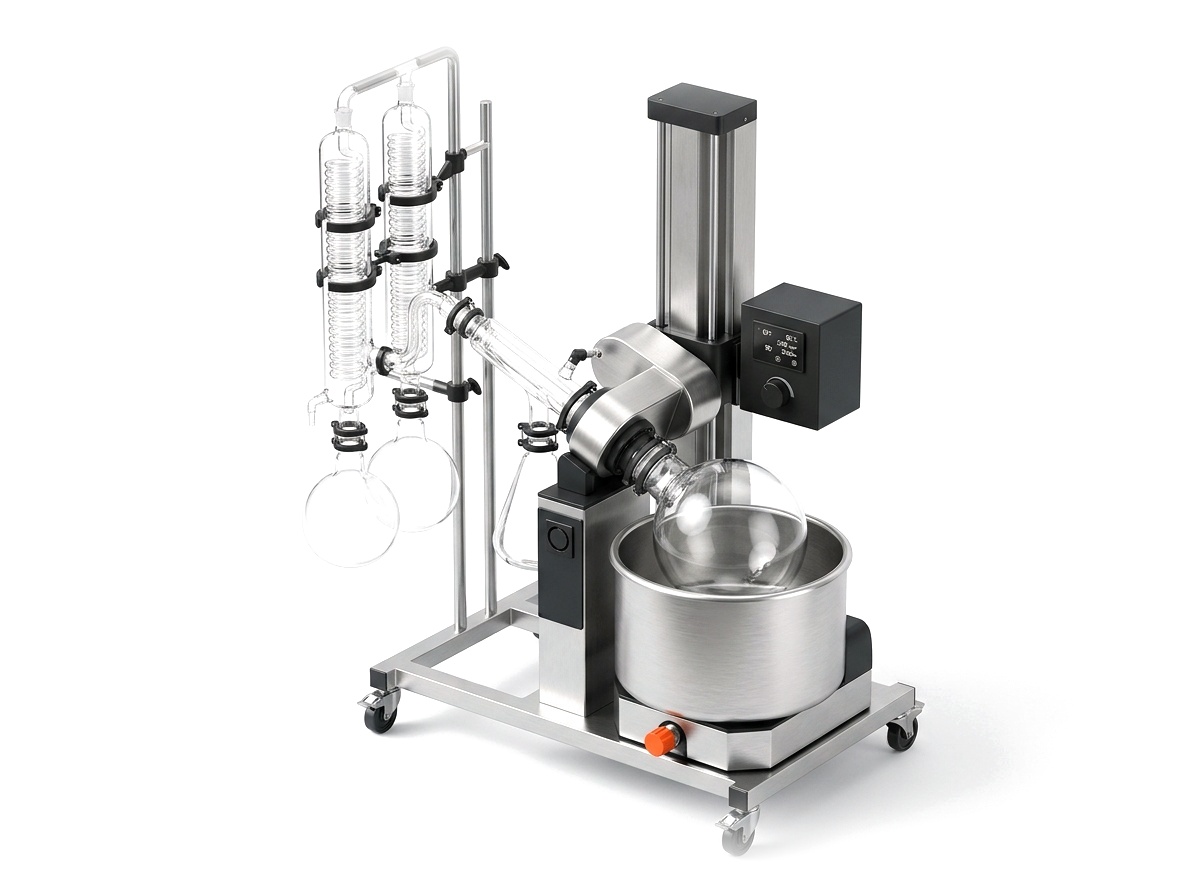
Running a standard home freeze dryer on default 125 F food settings -- melting wet bubble hash into bubbling brown taffy on the trays -- or pressing damp 4-day air-dried hash that sizzles, pops, and emulsifies on the rosin press.
Programming a 38 F (3.3 C) shelf temperature limit and 500 mTorr vacuum curve on a Harvest Right Pharmaceutical lyophilizer (or executing a 40 F / 35% RH microplaned sieve air-dry protocol with an anhydrous hot-knife sizzle check) before pressing at 152 F.
Quantitative Engineering Specification Matrix
| Drying Parameter | Pharmaceutical Freeze Dryer (Lyophilizer) | Home Freeze Dryer (Low-Temp Firmware) | Controlled Cold-Room Sieve Air Dry |
|---|---|---|---|
| Physical Water Removal Mechanism | Sublimation (Solid Ice -> Water Vapor below Triple Point) | Sublimation (Requires Firmware Override <=45 F) | Evaporation (Liquid Water -> Vapor at Atmospheric Pressure) |
| Total Drying Cycle Time | 16 - 24 Hours | 18 - 26 Hours | 120 - 168 Hours (5 to 7 Days) |
| Max Tray / Ambient Temperature | 35 F - 45 F (1.7 C - 7.2 C) Shelf Temp | 40 F - 50 F (4.4 C - 10 C) Shelf Temp | 38 F - 45 F Ambient at 30% - 35% RH |
| Vacuum Chamber Pressure | 250 - 500 mTorr (0.33 - 0.66 mbar) | 300 - 600 mTorr | 760,000 mTorr (1 atm Sea Level) |
| Trichome Cuticle Oxidation Color | Pale Ivory / White-Gold (Zero Enzymatic Browning) | Light Blonde to Pale Gold | Golden Amber to Light Tan (Surface Oxidation) |
| Monoterpene Retention vs. Fresh | 91% - 95% (When Shelf Temp <=40 F) | 86% - 91% | 78% - 85% (Slow Atmospheric Volatilization) |
| Tray Capacity & Capital Cost | 7-8 Trays (1,800g-2,500g Wet) // $3,295 - $4,295 | 4-5 Trays (900g-1,400g Wet) // $2,495 - $2,895 | Cardboard / Parchment Boxes + Dehumidifier // $250 |
1. The Triple Point of Water: How Sublimation Prevents Trichome Oxidation
When wet bubble hash is scooped out of a 33 F wash bag, the patty contains roughly 45% to 60% water by weight trapped between microscopic trichome heads. If you leave that wet patty exposed to oxygen at room temperature, two destructive reactions start immediately: polyphenol oxidase (PPO) enzymatic browning turns the translucent trichome cuticles dark brown within hours, and liquid capillary bridges cause adjacent resin heads to fuse into impermeable crusts that trap internal moisture (resulting in mold or sizzling rosin).
A freeze dryer (lyophilizer) bypasses the liquid water phase entirely by operating below the thermodynamic triple point of water (32.02 F / 0.01 C and 4,580 mTorr / 6.11 mbar). First, the chamber freezes the wet hash slurry solid at -20 F to -40 F (-29 C to -40 C). Next, the vacuum pump evacuates the chamber down to 250 to 500 mTorr -- less than one-thousandth of atmospheric pressure. Under that deep vacuum, gently warming the stainless trays to 35 F to 40 F (2 C to 4.5 C) supplies the latent heat of sublimation, causing ice crystals to transition directly from solid ice into water vapor (Ice -> Gas) without ever melting into liquid water. The vapor is captured instantly on the -40 F condenser walls, leaving behind dry, free-flowing, un-oxidized white-gold trichome sand.
2. Exact Harvest Right Pharmaceutical Freeze Dryer Recipe for WPFF Live Hash
Standard food freeze dryers default to a 125 F (52 C) shelf heater setting designed for strawberries and beef stew. If you run bubble hash at 125 F under vacuum, the trichome cuticles melt at 105 F, foam up like rising bread across the trays, and boil off 60% of your monoterpenes into the vacuum pump oil. Always configure your Harvest Right Pharmaceutical Freeze Dryer (or updated Home Pro firmware) with these exact parameters: - Tray Slurry Preparation: Mix your wet bubble hash with just enough 33 F RO water to form a smooth, pancake-batter slurry and spread it across parchment-lined trays to a uniform 4 mm thickness (roughly 220g to 300g wet weight per medium pharmaceutical tray). Pre-freeze trays in a chest freezer at -20 C for 4 hours before loading. - Shelf Temperature Limit: 38 F (3.3 C) for volatile fruit/Z-terp cultivars (Zkittlez, Trop Cherry, Papaya), or 42 F (5.5 C) for heavy gas cultivars (GMO, OG, Chem). Never exceed 45 F. - Initial Freeze Cycle: 9 hours (ensures core tray temperature reaches -30 F before vacuum pull). - Final Dry (Sublimation) Time: 11 to 14 hours at 500 mTorr vacuum setpoint. - Post-Cycle Sift: Once the cycle completes and the drain valve equalizes pressure, immediately sift the dry hash cake through a chilled 710-micron (or 1,000-micron) stainless steel kitchen strainer inside a cold room (<55 F) to homogenize the trichome sand before loading your 25u rosin bags.
3. No Freeze Dryer? The 5-Day Cold-Room Sieve Air-Dry Protocol That Still Produces Blonde Rosin
If you are a home extractor who cannot justify a $3,500 lyophilizer, you can still produce clean, blonde hash rosin using the Wet-Sieve & Desiccant Cold-Box Method: 1. Wick Immediately After Washing: Place your wet hash patty on a 25u pressing screen resting atop three layers of clean, unbleached paper towels under gentle weight for 20 minutes to pull out 70% of the bulk water. 2. Wet-Sieve (Never Freeze and Grate With a Cheese Grater): While the patty is still cold (34 F) and crumbly-damp, push it gently with a chilled stainless spoon through a coarse 500-micron to 710-micron stainless mesh sieve onto parchment-lined cardboard boxes. Wet-sieving separates individual trichome heads without shredding cuticles the way a metal microplane grater does on frozen pucks. 3. Dry in a 40 F / 30%-35% RH Wine Fridge or Frost-Free Refrigerator: Place the closed, parchment-lined cardboard boxes inside a clean frost-free refrigerator or thermoelectric wine cooler equipped with a small silica-gel desiccant pack for 5 to 6 days. 4. Pass the Hot-Dab-Tool Sizzle Test Before Pressing: Before loading your 25u rosin bag, touch 0.05g of the dried hash to a 300 F dab tool or banger. If you hear any crackling or see steam bubbles, the hash still contains >2% bound moisture and requires another 24 hours of drying.
Standardized RosinHub Laboratory Telemetry & Verification Protocol
Every recommendation in this Freeze Dryer vs. Air Drying Bubble Hash: Shelf Temps, Sublimation Curves & Oxidation Control engineering guide (freeze dryer settings for bubble hash) is benchmarked against the standardized three-pillar telemetry framework used across the RosinHub 40-Model Hardware Rank & Review Index:
- True Bag-Level PSI Calibration (40% Scoring Weight): Rather than citing raw hydraulic ram tonnage or uncalibrated bottle-jack claims, all pressure targets in this guide are normalized to True Bag-Level PSI (
Force_Lbs / Compressed_Bag_Area_sqin). Whether you operate a compact 4-ton home press with 3x5 inch platens or a 20-ton commercial press with 4x7 inch platens, keeping the hydrostatic pressure inside the monofilament nylon weave within the exact target window prevents cuticular lipid co-extraction and eliminates ultrasonic seam blowouts. Verify your exact press-and-bag combination in 5 seconds using the Interactive Rosin Platen & Bag PSI Calculator. - Platen & Chamber Thermal Uniformity (35% Scoring Weight): Temperature setpoints are only meaningful when surface variation across the contact zone stays below
+/- 2.5 F (1.4 C). Single-heater platens and uninsulated thin aluminum plates suffer up to 18 F of perimeter heat drop during a 120-second press, causing resin to solidify prematurely at the bag edges. We test every platen face across a 9-point Type-K surface thermocouple grid under load. - Mass-Balance Yield & Payback Economics (25% Scoring Weight): Every extraction adjustment -- from dropping platen temperature by 8 F to switching from a 120u flower bag down to a 90u or 73u bag -- trades gross weight against terpene and cannabinoid purity. Model your exact biomass cost, wet-to-dry WPFF wash conversion, and hardware break-even timeline in the Wash-to-Rosin Yield & ROI Calculator and cross-check cultivar genetics in the 50-Strain WPFF Bubble Hash Wash Database.
By anchoring your solventless SOP to measurable physical units -- degrees Fahrenheit/Celsius at the platen-parchment interface, pounds per square inch at the compressed nylon footprint, equilibrium relative humidity (62% ERH), and micron pore diameter -- you eliminate batch-to-batch guesswork and reproduce commercial 6-star results on any calibrated press.
Step-by-Step Pre-Press & Post-Press Quality Control Checklist
Run this 8-point engineering quality control gate before and after every batch to lock in repeatable yields:
- Gate 1 -- Biomass Hydration & Temperature Audit: For cured flower, verify 60% to 64% equilibrium relative humidity (ERH) inside a sealed jar for at least 36 hours before molding. For WPFF bubble hash or dry sift, verify anhydrous dryness (
<1.2% moisturevia the 300 F hot-knife sizzle check) and load bags in a chilled environment (<55 F) so trichome heads stay free-flowing. - Gate 2 -- Micron Mesh & Seam Orientation: Inspect every monofilament nylon bag before loading. Turn single-layer flower bags (73u, 90u, 120u) inside-out so the ultrasonic weld sits inside the puck, and always double-bag bubble hash or dry sift (25u or 37u inner envelope + 160u structural outer sleeve with opposing fold seams).
- Gate 3 -- Platen Perimeter Clearance Check: Confirm at least 0.50 to 0.75 inches of bare heated platen clearance around all four edges of the loaded bag so expanding nylon never overhangs the heated zone.
- Gate 4 -- Zero-Pressure Thermal Soak ('Kiss Contact'): Bring the platens into light contact (
<50 Bag PSI) for 30 to 45 seconds until the nylon perimeter visibly darkens with melted resin before ramping hydraulic pressure. - Gate 5 -- Laminar Pressure Ramp & Gauge Hold: Ramp smoothly over 45 to 60 seconds to your calculated target (300-500 Bag PSI for bubble hash; 400-700 Bag PSI for dry sift; 650-1,050 Bag PSI for cured flower). Never exceed 1,150 Bag PSI.
- Gate 6 -- Cold-Plate Collection & Immediate Jar Seal: Remove the parchment sheet immediately at the end of the dwell timer, transfer onto a chilled aluminum collection plate, and seal inside a thick-walled borosilicate or Miron UV glass jar with a PTFE-lined cap within 3 minutes.
- Gate 7 -- Post-Press Curing or Decarboxylation Routing: Route dabbable jars to a 64 F Cold Cure (72-120h) or 205 F -> 98 F Warm Jam Cure; route 25u vape batches to a 155 F (68 C) sealed-jar partial decarboxylation before injecting into postless ceramic vape hardware.
- Gate 8 -- Spent Puck & Mass-Balance Logging: Weigh your starting biomass, finished rosin, and spent puck to log exact net return percentage, and store all spent flower pucks and hash bags in a freezer jar for 240 F decarboxylation and MCT coconut oil edible recovery using standard 0.877 molar THCA-to-THC stoichiometry.
Interactive Solventless Engineering Workbench
Interactive Solventless Wash-to-Rosin Yield & Press ROI Calculator
Compare direct cured-flower rosin pressing against Whole Plant Fresh Frozen (WPFF) ice-water bubble hash washing and calculate exact hardware payback runs.
- Flower Rosin Temperature, Time & Platen PSI Master Chart (77 C to 104 C / 170 F to 220 F) (2397 words)
- Hash Rosin vs. Flower Rosin: Complete Yield, Purity, Micron & Cost-Per-Gram Comparison (2290 words)
- Rosin Micron Bag Complete Guide: 25u, 37u, 73u, 90u, 120u, 160u Mesh Selection & Blowout Prevention (2377 words)
- Bottle Tech vs. Chottle Tech vs. Flat Envelope Fold: Platen Area & True Bag PSI Math (2342 words)
- Ice-Water Bubble Hash Washing SOP for 6-Star Full-Melt Live Rosin (WPFF 33 F Protocol) (2082 words)
- Freeze Dryer vs. Air Drying Bubble Hash: Shelf Temps, Sublimation Curves & Oxidation Control (2041 words)
- Cold Cure Badder vs. Warm Cure Rosin Jam & THCA Sauce: Jar Tech Nucleation Kinetics (2123 words)
- Solventless Live Rosin Vape Cart Partial Decarb Protocol (65 C / 150 F Sealed Jar SOP) (1956 words)
- Why 62% Relative Humidity Doubles Flower Rosin Yield: Cuticle Plasticization & Steam-Drive Physics (1790 words)
- Hydraulic Hand-Pump vs. Pneumatic vs. Electric Rosin Presses: Gauge Telemetry & Seal Maintenance (1923 words)
- Solventless THCA Diamond & High-Terpene Fraction (HTFSE) Mechanical Separation Protocol (25u Step-Ramp) (1816 words)
- Static Tech & LPI Screen Dry Sift Cleaning SOP: Pressing 99% Pure Heads Without Ice Water (1654 words)
- How to Recover Residual THC from Spent Rosin Pucks: Stoichiometric Decarb & MCT Lipid Infusion Math (1614 words)
- Commercial Solventless Lab Floor Plan, Cold-Room HVAC & 12-Month Equipment ROI Blueprint (1508 words)
- Live Rosin Quartz Banger Thermodynamics: IR Thermometer Temps (450 F - 520 F) Without Chazzing (1555 words)
- Long-Term Live Rosin Cold Storage: Headspace Oxygen, Miron UV Glass & Terpene Volatilization Kinetics (1561 words)
- Bubble Hash & Freeze Dryer Quick SOP
- Rosin Bags Micron Quick Chart
- Rosin Vape Pen Cartridge Quick Guide